
kodimaram /dwajasthambam works
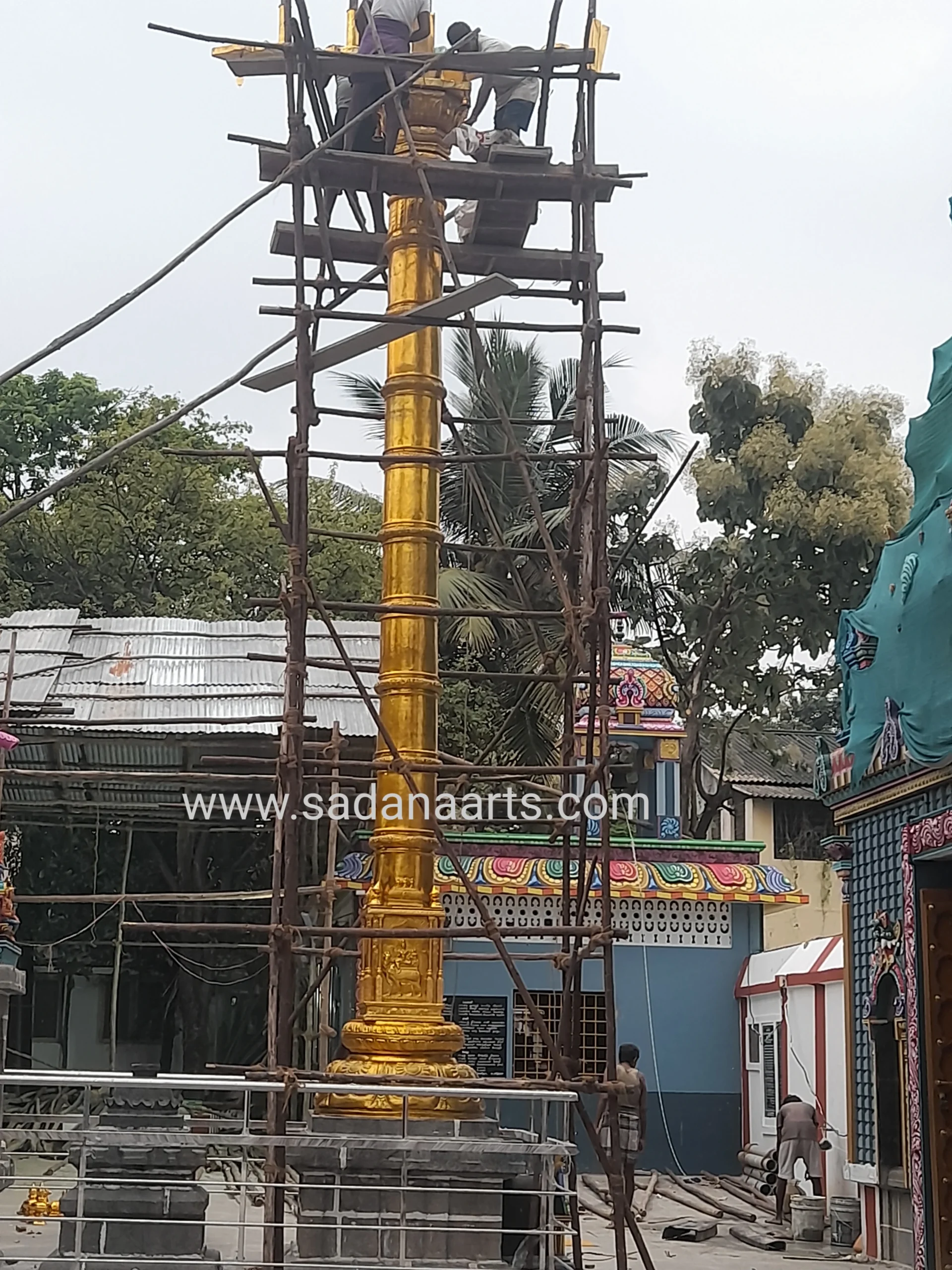
Kodimaram
kodimaram /dwajasthambam works
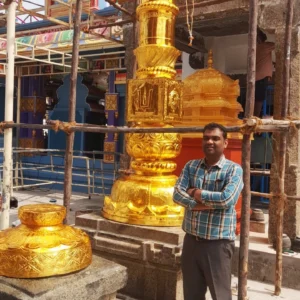
A kodimaram /dwajasthambam works (or Kodimaram) is a sacred, vertical flagstaff located in front of the sanctum sanctorum in Hindu temples, symbolizing the connection between heaven and earth. Often covered in metal sheets (gold, copper, or brass), it represents the spinal cord with 32 rings and is central to temple festivals.
Key Aspects of the Dwajasthambam:
- Symbolism & Structure: It represents the human spine (jeevadhara) and is often divided into three parts representing the Trimurthis: Brahma (base), Vishnu (middle), and Shiva (top).
- Purpose: It acts as a flagpole for Dwajarohanam (hoisting the flag) to signify the start of festivals. It also serves as a protective element, acting as a lightning rod and marking the consecrated space.
- Ritualistic Importance: Devotees prostrate before the Dwajasthambam (Ashtanga/Panchanga namaskaram) before entering the main shrine to surrender their ego.
- Location: It is positioned between the Bali Peetam (altar) and the Garbhagriha (sanctum).
Related products
-
Kodimaram
Kodimaram gold plating – Dwajasthambam
Reviews
There are no reviews yet.