
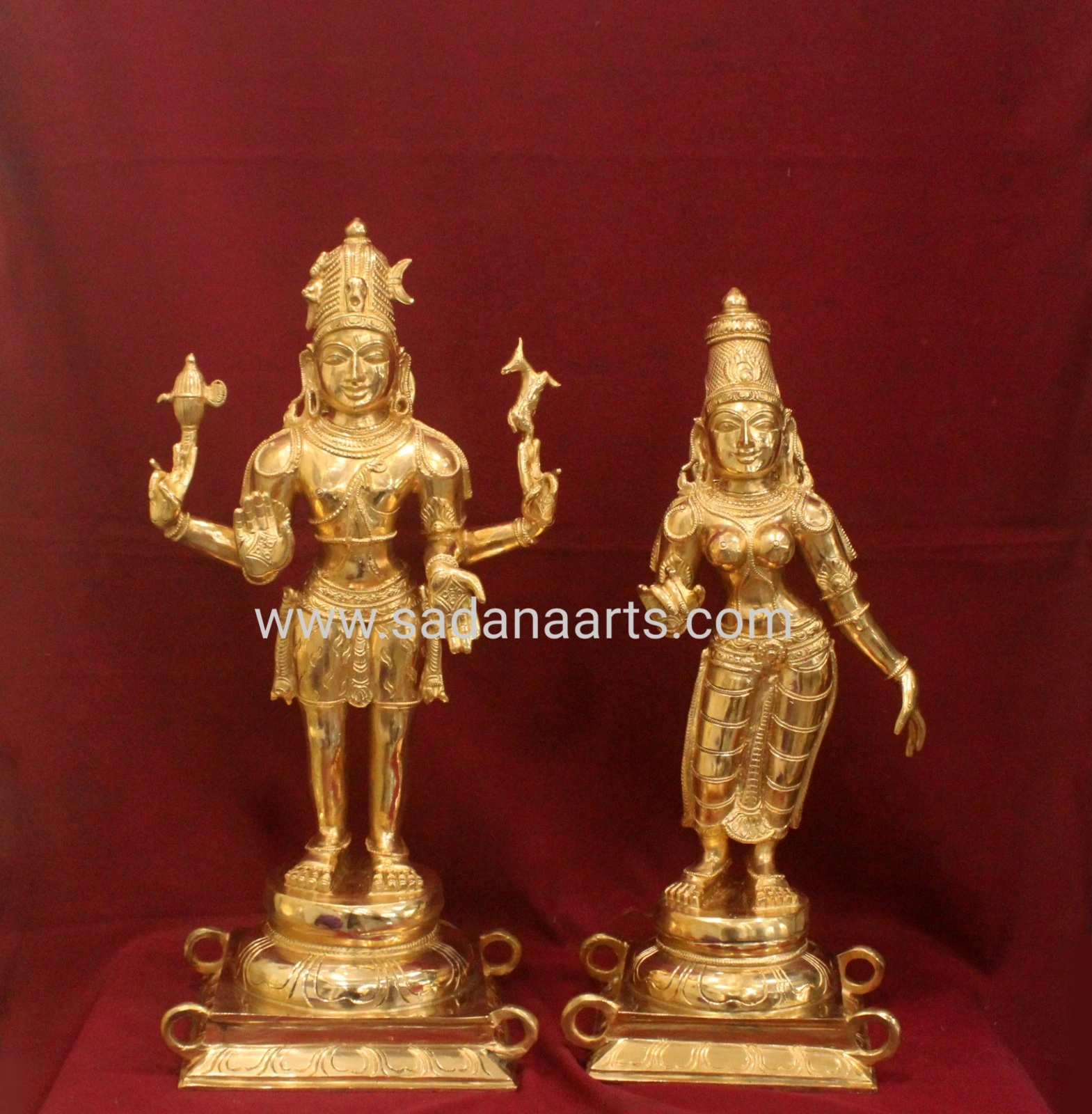
Standing Shivan Parvati Murti/ Panchaloha Statue shivan parvathi
In Hindu iconography, the standing Shiva and Parvati (often referred to as Kalyanasundara or Utsava Murti) represents the ultimate divine union, cosmic balance, and marital harmony. This posture is a popular choice for home altars, mandirs, and as gifts for auspicious occasions like weddings.
Symbolic Significance
- Cosmic Balance: Their union symbolizes the harmony of the universe, with Shiva representing transformation/consciousness and Parvati representing creation/energy (Shakti).
- Divine Relationship: Standing side-by-side or together, they reflect the ideal of conjugal love and mutual devotion.
- Protection & Blessings: Shiva is often depicted with his hand in the Abhaya Mudra (fearlessness/protection), while Parvati may hold a lotus, symbolizing purity and the sprouting of life.
Common Depictions & Attributes
- Ardhanarishwara: A specific standing form where the deity is half-Shiva (right side) and half-Parvati (left side), representing the inseparability of male and female principles.
- Kalyanasundara: Depicts the standing couple in their wedding form, often used in festive processions.
- Artistic Details:
- Shiva: Often holds an axe (Parashu), a deer (Mruga), or a trident (Trishula) and damru. He may be shown in his Chaturbhuj (four-armed) form.
- Parvati: Frequently shown in the graceful Tribhanga (three-fold) pose.
- Materials: Statues are commonly crafted from brass, marble, copper, or wood.
- Home Mandirs: Standing idols are suitable for medium-to-large home temples and are believed to bring peace and spiritual strength.
- Gifting: Often given for housewarmings and anniversaries as a symbol of prosperity and love.
- Vastu/Tradition: While sitting statues are often preferred for daily meditation, standing Utsava Murtis are traditional for worship and festivals.
Would you like to know more about the specific Vastu directions for placing these idols or explore different material types like brass versus marble?
Reviews
There are no reviews yet.